
The CIA Triad: The Unbeatable Foundation of Cybersecurity (No, Not That CIA)
Let’s be real.
The word “cybersecurity” is overwhelming. Zero-day exploits. Advanced Persistent Threats. Ransomware-as-a-Service.
It’s easy to get lost in the complexity and forget what you’re actually protecting.
But every single expert—every CISO, every security architect—thinks about security through one simple, powerful mental model. It’s the bedrock everything else is built on.
It’s called the CIA Triad.
This isn’t a fancy government secret. It’s a framework so fundamental that if you understand it, you instantly understand the goal of every security control, policy, and tool.
Forget memorizing acronyms for a second. Let’s talk about what you actually care about:
- Keeping your data private (Confidentiality).
- Knowing your data hasn’t been tampered with (Integrity).
- Making sure your data and systems are there when you need them (Availability).
This guide will break down each principle, show you how they work together (and against each other), and give you a practical framework to secure anything.
Let’s dive in.
What is the CIA Triad? (The Simple Answer)
The CIA Triad is a foundational model in cybersecurity that outlines the three core objectives of securing information and systems:
- Confidentiality: Keeping information secret and private, away from unauthorized access. It’s about making sure only the right people can read the data.
- Integrity: Protecting information from being altered or destroyed by unauthorized parties. It’s about trust and accuracy, ensuring the data is real and hasn’t been changed.
- Availability: Ensuring information and systems are accessible and operational when authorized users need them. It’s about reliability and uptime.
Think of it like securing your house:
- Confidentiality: Your blinds are closed so people can’t look in. (Encryption, Access Controls)
- Integrity: You have a tamper-proof seal on your door to know if someone broke in. (Hashes, Digital Signatures)
- Availability: You ensure you always have a key to get inside when you need to. (Redundancy, Backups, DDoS Protection)
If you neglect any one of these three, your security crumbles.
Deep Dive: The Three Pillars Explained
1. Confidentiality: “No Peeking.”
Confidentiality is about preventing the unauthorized disclosure of information. It’s the concept most people think of when they hear “security.”
How We Ensure Confidentiality:
- Encryption: Scrambling data so it’s unreadable without a secret key. (e.g., AES-256 encryption for data at rest, TLS 1.3 for data in transit).
- Access Control Lists (ACLs): Rules that define who can access what. The Principle of Least Privilege is key here—users should only have access to what they absolutely need to do their jobs.
- Authentication: Verifying someone is who they say they are before granting access. (e.g., Strong passwords, Multi-Factor Authentication (MFA), Biometrics).
Real-World Example of a Confidentiality Failure:
A hospital stores patient medical records on a server but fails to set proper file permissions. A malicious actor gains access to the network and can freely copy all patient data, leading to a massive data breach and HIPAA violation.
2. Integrity: “No Tampering.”
Integrity is about maintaining the accuracy, trustworthiness, and consistency of data over its entire lifecycle. It ensures data has not been changed, altered, or destroyed in an unauthorized manner.
How We Ensure Integrity:
- Hashing: Creating a unique, fixed-size digital fingerprint of a file (e.g., using SHA-256). If even one bit in the file changes, the hash changes completely, alerting you to tampering.
- Digital Signatures: Using cryptography to mathematically verify the authenticity and origin of a message or file. This provides non-repudiation—the sender cannot deny having sent it.
- Version Control & Logging: Keeping meticulous logs of who accessed what data and when, and what changes were made.
Real-World Example of an Integrity Failure:
A hacker breaches a financial institution’s system and subtly alters bank account numbers in a database before a transfer batch is processed. Money is sent to the wrong accounts, causing massive financial loss and eroding trust.
3. Availability: “No Downtime.”
Availability ensures that information and critical systems are operational and accessible to authorized users when they need them. A system that is secure but offline is useless.
How We Ensure Availability:
- Redundancy: Eliminating single points of failure. This includes RAID arrays for disks, redundant power supplies, and backup internet connections.
- Disaster Recovery (DR) & Business Continuity (BC) Plans: Having tested procedures to restore systems and data after an outage.
- DDoS Mitigation: Using services to absorb and filter massive, malicious traffic floods designed to take a service offline.
- Regular Patching & Maintenance: Preventing outages caused by known software vulnerabilities or hardware failures.
Real-World Example of an Availability Failure:
A ransomware attack encrypts all of a company’s critical files. Because their backups were also infected or outdated, the company cannot restore operations. They face days of costly downtime and are forced to either pay the ransom or go out of business.
The Balancing Act: Why the CIA Triad is a Triangle
This is the most critical insight: The three principles often exist in tension.
Strengthening one can often weaken another. Security is about finding the right balance for your specific context.
- Confidentiality vs. Availability: Enforcing extremely strong encryption and complex MFA for every system access (high confidentiality) can slow users down and hinder their ability to get work done (reduced availability).
- Integrity vs. Availability: Taking a critical system completely offline for a urgent security patch (to protect integrity) directly impacts its availability during that maintenance window.
The goal isn’t to maximize all three to 100%. It’s to find the optimal balance for your organization’s risk tolerance.
A public website for news might prioritize Availability over extreme Confidentiality. A encrypted messaging app for whistleblowers prioritizes Confidentiality and Integrity above all else.
How to Use the CIA Triad: A Practical Framework
Use the CIA Triad as a lens to evaluate any security decision:
- When assessing a new tool/vendor: Does this tool help our confidentiality? (e.g., Does it use encryption?) Does it ensure data integrity? (e.g., Can we audit its logs?) What is its uptime SLA for availability?
- When responding to an incident: Ask three questions: Was confidentiality breached? (Was data stolen?). Was integrity compromised? (Was data altered?). Was availability impacted? (Are systems down?).
- When designing a system: Bake in the triad from the start (“Security by Design”). How will we encrypt data? How will we verify its integrity? How will we ensure it’s always available?
Common Myths & Mistakes
- Myth: “The CIA Triad is outdated.” Reality: It’s more relevant than ever. New models like the Parkerian Hexad add useful concepts (like Possession, Authenticity), but they build upon, not replace, the CIA Triad.
- Mistake: Focusing only on Confidentiality. This is the most common error. Businesses pour money into encryption but neglect backups and patching, leaving them vulnerable to ransomware that destroys availability.
Key Takeaways & Next Steps
- The CIA Triad is the core model of cybersecurity: Confidentiality, Integrity, Availability.
- You cannot have true security without all three. They are non-negotiable.
- Security is a balancing act between these three principles.
- Use this model to make better security decisions, evaluate risks, and communicate with stakeholders.
Ready to take the next step? Your action plan:
- Audit Your Passwords: Strengthen Confidentiality by using a password manager and enabling MFA everywhere.
- Verify Your Backups: Ensure Availability by performing a test restore of a critical file. Is your backup process working?
- Learn About Hashing: Understand Integrity by downloading this checksum tool and verifying the hash of a downloaded file.
To truly build on this foundation, explore our guide on implementing the Principle of Least Privilege, which is critical for maintaining Confidentiality.
Did you find this guide to the CIA Triad helpful? Share your thoughts or questions in the comments below, or explore our other Cybersecurity Basics guides.
Healthcare Ransomware Case Study 2025
Anatomy, Impact & NIST CSF DefenseCase Study: Responding to a Healthcare Ransomware Attack Introduction: When…
Service Mesh vs API Gateway: Security Implications
Security should move at the speed of your pipeline. As organizations modernize with Kubernetes and…
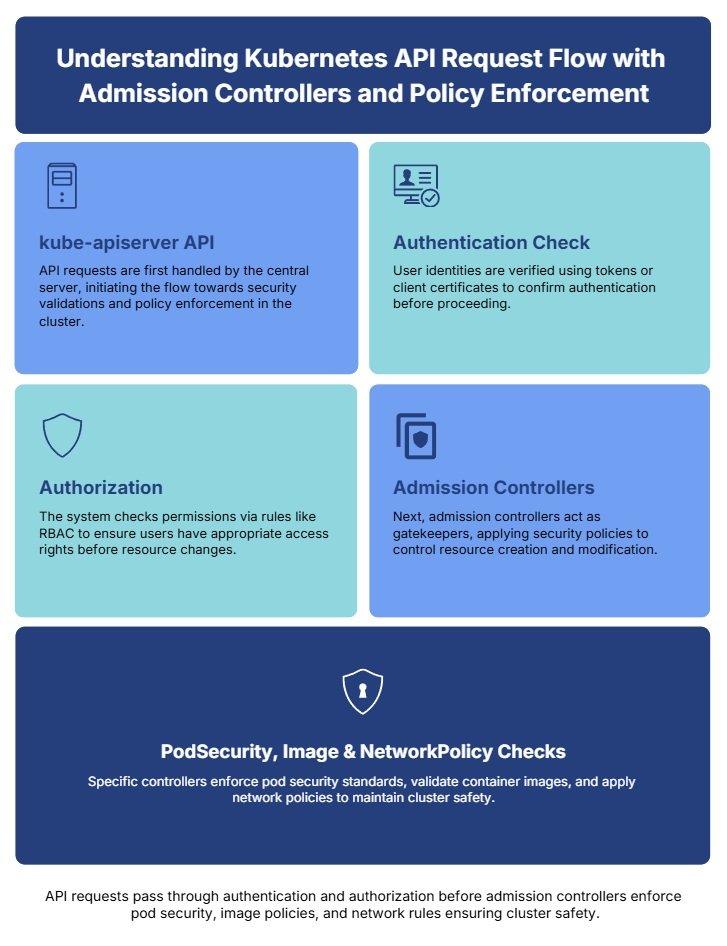
Kubernetes Admission Controllers: Security Use Cases – Complete Guide
Security should move at the speed of your pipeline. When teams scale to multiple clusters,…

Container Supply Chain Security: Image Signing and Verification
In the modern CI/CD pipeline, the container is the new currency of deployment. But just…
Serverless Functions Security: AWS Lambda, Azure Functions, GCP Cloud Functions
Securing Serverless Functions Security should move at the speed of your pipeline. Serverless computing accelerates…
Multi-Tenant Kubernetes Security Challenges
When teams scale to multiple clusters, visibility gaps grow fast. Kubernetes was designed for flexible…