
Cybersecurity Compliance: The Definitive Guide for 2025
In today’s digital landscape, protecting sensitive data isn’t just a best practice—it’s a legal and regulatory requirement. Cybersecurity compliance is the formal process of adhering to established standards and regulations designed to protect data, privacy, and IT systems. It’s the critical bridge between your organization’s security posture and the legal obligations you must meet.
This pillar page serves as your comprehensive guide to understanding what cybersecurity compliance is, why it’s non-negotiable, and how to implement a robust compliance program that protects your business from both cyber threats and regulatory penalties.
What is Cybersecurity Compliance? (And What It Isn’t)
Cybersecurity compliance is the practice of conforming to mandated cybersecurity laws, regulations, guidelines, and specifications relevant to an organization’s industry and geographic location.
- What it IS: A baseline of required security controls. A continuous process of assessment and improvement. A demonstration of due diligence to regulators, clients, and partners.
- What it ISN’T: A one-time project. A substitute for a comprehensive cybersecurity strategy. A guarantee of complete security. Compliance sets the floor, not the ceiling, for your security.
Why is Cybersecurity Compliance Critical? Beyond Avoiding Fines
While avoiding hefty fines and penalties is a major motivator, the benefits of a strong compliance program run much deeper:
- Avoid Major Financial Penalties: Non-compliance can result in catastrophic fines (e.g., up to 4% of global annual revenue under GDPR) and legal fees.
- Build Trust and Enhance Reputation: Demonstrating compliance shows customers, investors, and partners that you are a trustworthy custodian of their data.
- Win More Business: Many RFPs and enterprise contracts require proof of compliance with specific standards (e.g., ISO 27001, SOC 2) before you can even bid.
- Improve Your Actual Security Posture: The process of achieving compliance forces you to identify vulnerabilities, implement strong controls, and establish best practices, making you a harder target for attackers.
- Gain a Competitive Advantage: In a world riddled with data breaches, a strong compliance record can be a key differentiator.
Key Cybersecurity Compliance Frameworks & Regulations
Compliance is not one-size-fits-all. Your requirements depend on your industry, the type of data you handle, and where you operate.
1. Industry-Agnostic Frameworks (The “How-To”)
These provide the blueprint for building a security program but are not legally mandated by themselves. They are often used to achieve compliance with other regulations.
- NIST Cybersecurity Framework (CSF): A voluntary framework developed by the U.S. government. It’s organized around five core functions: Identify, Protect, Detect, Respond, and Recover. It’s widely adopted due to its flexibility and risk-based approach.
- NIST SP 800-53: A comprehensive catalog of security and privacy controls for federal information systems, but often used as a gold standard by private companies handling sensitive data.
- ISO/IEC 27001: An international standard for an Information Security Management System (ISMS). Certification against ISO 27001 is a globally recognized validation that your organization follows information security best practices.
2. Industry-Specific Regulations (The “Must-Do”)
These are legally binding laws and regulations.
- General Data Protection Regulation (GDPR): A EU regulation that protects the data privacy of EU citizens. It applies to any organization anywhere in the world that processes or holds the data of EU residents. Key principles include data minimization, right to be forgotten, and mandatory breach notification.
- Health Insurance Portability and Accountability Act (HIPAA): A U.S. law that sets the standard for protecting sensitive patient health information (PHI). It applies to healthcare providers, health plans, and their business associates.
- Payment Card Industry Data Security Standard (PCI DSS): A global standard mandated by credit card companies to secure credit and debit card transactions against fraud and theft. It applies to any organization that accepts, processes, stores, or transmits cardholder data.
- California Consumer Privacy Act (CCPA/CPRA): A state statute that enhances privacy rights and consumer protection for residents of California, USA. It grants consumers new rights regarding their personal information.
3. Government & Critical Infrastructure
- SOC 2 (Service Organization Control 2): A framework for managing data based on five “trust service principles” (Security, Availability, Processing Integrity, Confidentiality, Privacy). It is crucial for technology and cloud computing companies that store customer data.
- Cybersecurity Maturity Model Certification (CMMC): A unified standard for implementing cybersecurity across the U.S. Defense Industrial Base (DIB). It is required for contractors working with the Department of Defense.
The Step-by-Step Cybersecurity Compliance Lifecycle
Achieving and maintaining compliance is a continuous cycle, not a destination.
- Identify & Scope: Determine which regulations and frameworks apply to your business. What data do you handle? Where are you located? Who are your customers?
- Assess & Gap Analyze: Conduct a thorough risk assessment. Compare your current security controls against the requirements of the chosen framework. Identify gaps and vulnerabilities.
- Plan & Remediate: Develop a formal plan to address the gaps. Prioritize risks based on their potential impact and allocate resources to implement the necessary controls (e.g., encryption, access controls, policies).
- Implement & Document: Deploy the security controls. Crucially, document every process, policy, and control. If it isn’t documented, it didn’t happen in the eyes of an auditor.
- Train & Cultivate: Train your employees on security policies and their role in maintaining compliance. A strong security culture is your first line of defense.
- Monitor & Audit: Continuously monitor your systems for compliance drift and new threats. Conduct internal audits and prepare for external audits by regulators or third parties.
- Review & Improve: The threat and regulatory landscape is always changing. Regularly review your program and update it to address new risks and requirements.
Common Challenges in Achieving Compliance
- Complexity & Overlap: Juggling multiple, sometimes overlapping, frameworks.
- Evolving Regulations: Laws like GDPR and CCPA are constantly being interpreted and updated.
- Resource Constraints: Lack of budget, skilled personnel, or time.
- “Checkbox” Mentality: Treating compliance as a checklist rather than embedding it into the company culture.
- Supply Chain Risk: Ensuring your third-party vendors and partners are also compliant.
Compliance Checklist: Getting Started
- Identify all applicable regulations (GDPR, HIPAA, PCI DSS, etc.).
- Appoint a dedicated compliance officer or team.
- Perform a comprehensive risk assessment and gap analysis.
- Develop and document clear security policies and procedures.
- Implement core technical controls (encryption, MFA, access controls).
- Establish an incident response and data breach notification plan.
- Conduct regular employee security awareness training.
- Schedule continuous monitoring and annual audits.
FAQ: Cybersecurity Compliance
Q: Is being compliant the same as being secure?
A: No. Compliance means you meet a specific set of requirements. Security is the overall state of being protected. You can be compliant but not fully secure if you only do the bare minimum. A robust security strategy uses compliance as a foundation and builds upon it.
Q: Who is responsible for compliance in an organization?
A: Ultimately, the board and C-suite are responsible. Day-to-day, it is often managed by a Chief Information Security Officer (CISO), a Compliance Officer, or a dedicated team, but it requires collaboration across IT, legal, HR, and every business unit.
Q: What’s the biggest mistake companies make?
A: Treating compliance as a one-time, IT-only project. Success requires an ongoing, organization-wide commitment woven into the fabric of the business.
Q: How often do we need to be audited?
A: It depends on the standard. PCI DSS requires annual audits, SOC 2 reports are typically done annually, while ISO 27001 requires surveillance audits and recertification every three years.
Conclusion: Compliance as a Strategic Foundation
Cybersecurity compliance is not just a legal hurdle. When executed correctly, it is a powerful strategic tool that builds resilience, fosters trust, and creates a structured foundation for a mature cybersecurity program. By understanding the landscape, implementing a continuous process, and viewing compliance as part of your core business operations, you can turn a mandatory requirement into a tangible business advantage.
Ready to build a compliance program that protects and empowers your business? Contact our experts today for a personalized consultation.
Healthcare Ransomware Case Study 2025
Anatomy, Impact & NIST CSF DefenseCase Study: Responding to a Healthcare Ransomware Attack Introduction: When…
Service Mesh vs API Gateway: Security Implications
Security should move at the speed of your pipeline. As organizations modernize with Kubernetes and…
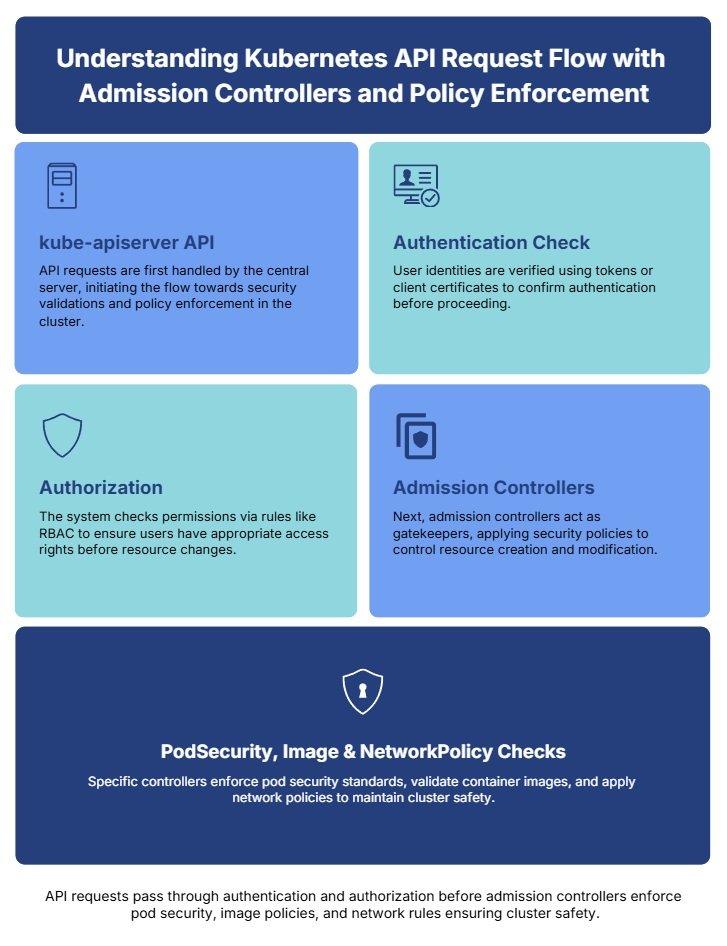
Kubernetes Admission Controllers: Security Use Cases – Complete Guide
Security should move at the speed of your pipeline. When teams scale to multiple clusters,…

Container Supply Chain Security: Image Signing and Verification
In the modern CI/CD pipeline, the container is the new currency of deployment. But just…

Serverless Functions Security: AWS Lambda, Azure Functions, GCP Cloud Functions
Securing Serverless Functions Security should move at the speed of your pipeline. Serverless computing accelerates…
Multi-Tenant Kubernetes Security Challenges
When teams scale to multiple clusters, visibility gaps grow fast. Kubernetes was designed for flexible…